Let’s be honest for a second. Tile floors look sleek, modern, and are supposed to be a breeze to clean, right? Yet, we’ve all been there: chasing that same dust bunny around the kitchen with a broom, only for it to find a new hiding spot. Or worse, using a powerful vacuum that seems to just scatter debris into the grout lines. If you’re ready to buy a vacuum cleaner for tile floors that actually solves these problems instead of creating new ones, you’ve landed in the right place. The truth is, not all vacuums are created equal, and what works wonders on a plush carpet can be a scratchy, ineffective nightmare on your beautiful tile.
This guide is your new best friend. We’re going to break down everything you need to know, from the techy stuff like suction power and filtration to the real-world practicalities of different vacuum types. By the end, you’ll be able to walk away with the confidence that you’re making the best possible choice for your home. For those who enjoy the convenience and value offered by large retailers, exploring options to buy vacuum cleaner costco can be a great starting point in your research.
Why Your Tile Floors Deserve a Specialized Vacuum
You might be thinking, “It’s a hard floor, how complicated can it be?” Well, tile presents a unique set of challenges that your average, run-of-the-mill vacuum might not be equipped to handle.
- The Grout Line Gauntlet: Those little crevices between tiles are magnets for dirt, crumbs, and pet hair. A vacuum without focused suction or the right attachments will just glide right over them, leaving the gunk behind.
- The Scatter Effect: This is the most common frustration. Vacuums with aggressive, stiff-bristled brush rolls designed for carpets can act like tiny leaf blowers on tile, flinging fine dust and pet hair into the air instead of sucking it up.
- The Scratch Risk: While most modern tile is durable, a vacuum with hard plastic wheels or a rough brush head can potentially cause fine scratches and scuffs over time, dulling your floor’s beautiful finish.
A vacuum designed for tile floors addresses these issues head-on, ensuring a deep clean without the collateral damage.
Key Features When You Buy a Vacuum Cleaner for Tile Floors
Navigating the world of vacuum specs can feel like learning a new language. Let’s cut through the noise and focus on what truly matters for pristine tile.
Suction Power is King, But the Brush Roll is Queen
For tile, strong, consistent suction is your number one priority. It’s what lifts the fine dust from the surface and pulls grime out of grout lines. However, the brush roll is equally important.
- Avoid Stiff Bristles: Look for vacuums with a soft roller brush (often made of microfiber) or the option to turn the brush roll off completely. A soft roller is a game-changer; it gently dusts the floor and directs debris into the suction channel without scattering it.
- Suction-Only Mode: Many upright and canister vacuums have a “bare floor” setting that retracts the stiff bristles or stops them from spinning. This is a must-have feature if you’re considering a multi-surface model.
The Cordless Convenience vs. Corded Power Debate
This often comes down to personal preference and the size of your home.
- Cordless Stick Vacuums: These are the undisputed champions of convenience. They’re lightweight, easy to grab for quick clean-ups, and there’s no cord to trip over. The trade-off can be battery life and sometimes, raw power. However, modern high-end models have seriously closed the gap.
- Corded Vacuums (Upright & Canister): These models typically offer more powerful, unwavering suction and you never have to worry about a battery dying mid-clean. They are fantastic for larger homes and deep cleaning sessions.
Why a HEPA Filter Isn’t Just for Allergy Sufferers
Dust, pollen, and pet dander get kicked up easily on hard floors. A vacuum without good filtration can suck these particles in and spew them right back out into the air you breathe.
“On hard surfaces like tile, microscopic allergens don’t have carpet fibers to cling to. They become airborne with the slightest disturbance. A vacuum with a sealed system and a true HEPA filter is crucial for trapping these particles and improving indoor air quality, not just cleaning the floor.” – Dr. Eleanor Vance, Home Hygiene Specialist
A HEPA filter captures 99.97% of particles as small as 0.3 microns. It’s not just a feature; it’s an investment in a healthier home environment.
|
Our Picks for the Best Vacuum Cleaner in 2026
As an Amazon Associate, we earn from qualifying purchases.
|
||
| Num | Product | Action |
|---|---|---|
| 1 | LEVOIT Cordless Vacuum Cleaner, Stick Vac with Tangle-Resistant Design, Up to 50 Minutes, Powerful Suction, Rechargeable, Lightweight, and Versatile for Carpet, Hard Floor, Pet Hair, LVAC-200 |

|
| 2 | Shark | Pet Cordless Vacuum Cleaner | LED Headlights | Removable Handheld Vacuum for Pet Hair | Crevice Tool & Pet Multi-Tool Included | 40min Runtime | For Carpet & Hard Floors | Grey | IX141 |
|
| 3 | BISSELL CleanView Compact Upright Vacuum, Fits in Dorm Rooms & Apartments, Lightweight with Powerful Suction and Removable Extension Wand, 3508 |
|
| 4 | Amazon Basics Upright Bagless Vacuum Cleaner for Carpet and Hard Floors, With Crevice and Upholstery Tools, Detachable Handle, Lightweight (8.4 lbs), 1.7L Dust Cup, 720W, 25ft Cord, Black/White |
|
| 5 | BLACK+DECKER dustbuster QuickClean Cordless Handheld Vacuum, Car Vacuum Portable (HNVC215B10) |
|
| 6 | BISSELL CleanView Compact Turbo Upright Vacuum with Quick Release Wand, Full Size Power, Compact Size for Apartments & Dorms, 3437F |
|
| 7 | Shark NV352 Navigator Lift Away Upright Vacuum, Hepa Filter, Anti-Allergen Technology, Swivel Steering, Ideal for Carpet, Stairs, & Bare Floors, with Wide Upholstery & Crevice Tools, Lavender |
|
| 8 | Shark HV322 Rocket Deluxe Pro Corded Stick Vacuum with LED Headlights, XL Dust Cup, Lightweight, Perfect for Pet Hair Pickup, Converts to a Hand Vacuum, with Pet Attachments, Bordeaux/Silver |
|
| 9 | BLACK+DECKER dustbuster AdvancedClean Cordless Handheld Vacuum, Compact Home and Car Vacuum with Crevice Tool (CHV1410L) |
|
| 10 | Shark | Upright Vacuum Cleaner | Navigator Lift-Away | Swivel Steering | HEPA Filter | Vacuum for Pet Hair | Crevice Tool & Dusting Brush Included | For Carpets & Hard Floors | White/Silver | NV356E |
|
What are the Best Types of Vacuums for Tile?
Let’s look at the main contenders and see where they shine.
The Cordless Stick Vacuum
The most popular choice for a reason. They are nimble, often come with a soft roller head perfect for tile, and easily convert to a handheld for cleaning up high or in tight spaces. Perfect for daily maintenance and quick spills. Exploring options to buy vacuum cleaner online often reveals the widest selection and competitive pricing for these modern marvels.
- Pros: Extremely convenient, lightweight, great for stairs and quick clean-ups.
- Cons: Limited battery life, dustbin may need frequent emptying.
The Canister Vacuum
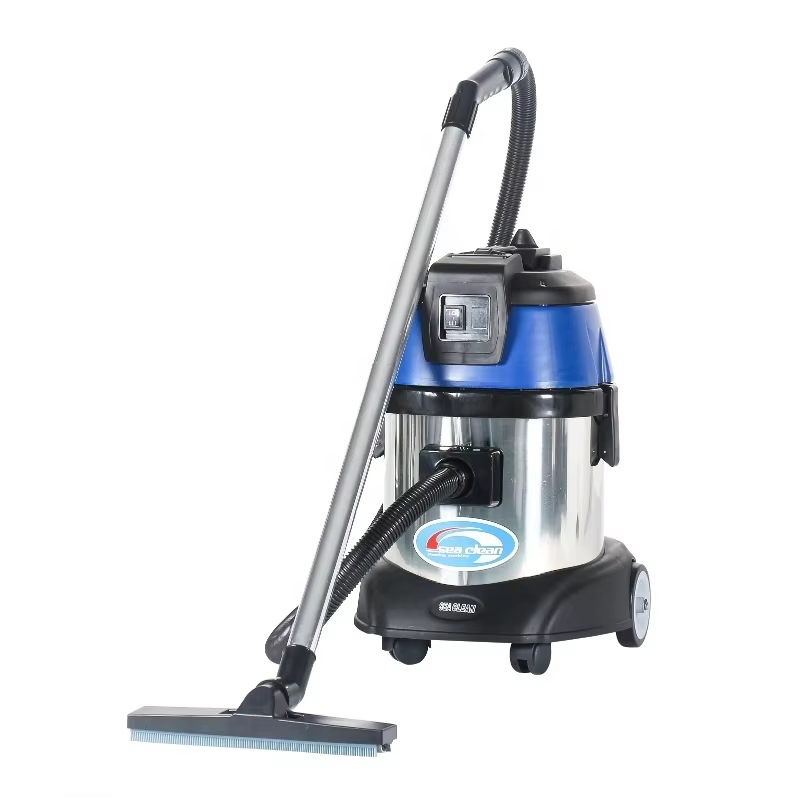
A powerhouse of suction. The cleaning head is light and maneuverable, attached by a long hose to the main body which contains the motor and dustbin. They excel at getting under furniture and often come with a suite of tools for detailed cleaning, like a dedicated crevice tool for grout.
- Pros: Incredible suction power, large capacity, very versatile with attachments.
- Cons: Can be bulky to store and pull around the house.
The Upright Vacuum
The classic workhorse. While many are designed for carpets, there are excellent models for bare floors. The key is to find one that allows you to turn off the beater bar. For those on a budget, it is entirely possible to buy upright vacuum cleaner under 150 that has this essential feature.
- Pros: Often more affordable, powerful suction, wide cleaning path.
- Cons: Can be heavy, less maneuverable than other types.
The Robot Vacuum
Your little cleaning assistant. Robot vacuums are brilliant for daily maintenance. They can keep dust and pet hair under control between your deeper cleaning sessions. Look for models with strong suction and smart navigation to ensure they cover your entire floor plan effectively.
- Pros: Effortless, automated cleaning; can clean under beds and sofas easily.
- Cons: Not a replacement for a deep clean; can get stuck on obstacles.
What About Those Inevitable Spills?
Tile floors, especially in kitchens and bathrooms, are prone to wet messes. While your standard vacuum is a no-go for liquids, a hybrid machine can be a lifesaver. For a truly all-in-one solution, a model that can handle both wet and dry messes is a fantastic tool. This is where options to buy wet dry vacuum cleaner under 300 come into play, offering incredible versatility for tough jobs beyond just dust.
Frequently Asked Questions
Can I just use my carpet vacuum on my tile floors?
You can, but only if it has a setting to turn off the spinning brush roll or a specific hard floor head. Using a stiff, fast-spinning brush roll on tile can scratch the surface and will likely just scatter debris around rather than picking it up effectively.
Is more suction power always better for tile?
Not necessarily. While strong suction is important for pulling debris from grout, extremely high suction can sometimes make the vacuum difficult to push. The key is a balance between good airflow (measured in CFM) and a well-designed cleaning head that seals to the floor.
How often should I vacuum my tile floors?
For high-traffic areas like kitchens and entryways, a quick vacuum every 1-2 days is ideal to prevent dirt from being ground into the grout. For less-used areas, 1-2 times a week is generally sufficient.
Do robot vacuums work well on grout lines?
Modern robot vacuums with strong suction and good side brushes do a surprisingly decent job on shallow grout lines for daily maintenance. However, for a deep clean of stained or deep grout, you will still need a standard vacuum with a crevice tool.
What is the best way to clean pet hair from tile?
For pet hair on tile, a vacuum with a soft roller head is fantastic. The microfiber material is excellent at grabbing and lifting hair. Strong suction is also crucial to prevent clumps from being blown around. A bagless model can also be more convenient for frequently emptying pet hair.
Your Final Checklist for a Smarter Purchase
Choosing the right vacuum is about making your life easier and your home cleaner. As you get ready to make your decision, remember that the advantages of finding a product with buy vacuum cleaner with free shipping can add significant value to your purchase, saving you money in the long run.
To wrap it all up, here’s your final takeaway: a great vacuum for tile doesn’t just suck, it sweeps, protects, and purifies. It respects the hard, smooth surface by using the right tools—like a soft roller or suction-only head—to capture everything from fine dust to pesky pet hair. It pulls grime from grout without a fight and traps allergens with a HEPA filter, leaving both your floors and your air cleaner. Making the choice to buy a vacuum cleaner for tile floors with these features in mind isn’t just a purchase; it’s an upgrade to your entire cleaning routine.