Let’s be honest, we all think we know how to use a vacuum cleaner. You plug it in, you push it around, and the floor gets cleaner, right? Well, sort of. But did you know that the average home can accumulate up to 40 pounds of dust per year? A lot of that gets left behind by improper vacuuming. Learning how to use a vacuum cleaner properly isn’t just about tidying up; it’s about transforming your machine from a simple dirt-sucker into a deep-cleaning powerhouse that improves your home’s air quality and extends the life of your carpets and floors. It’s the difference between a surface-level spruce-up and a truly satisfying, deep-down clean.
This guide is your new playbook. We’re going to dive into the techniques the pros use, turning a mundane chore into an effective home maintenance routine. For a more comprehensive look at transforming your cleaning routine, our guide on step by step cleaning with vacuum cleaner offers an excellent starting point.
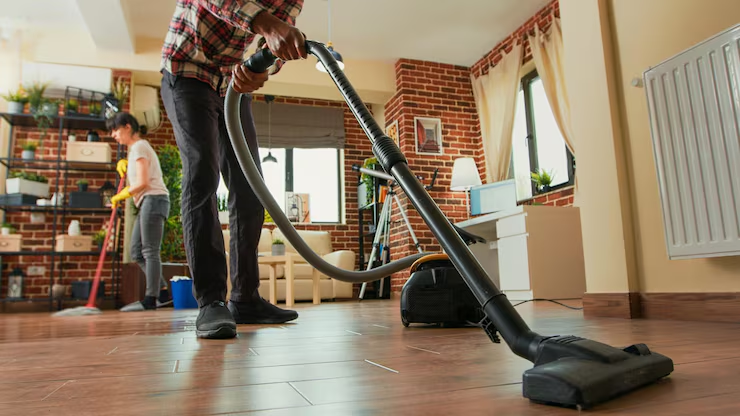 For see our vacuum cleaner recommendations on this site.
Before You Even Plug It In: The Pre-Vacuum Checklist
A great cleaning session starts before the motor even whirs to life. Rushing this stage is like trying to paint a wall without prepping it first—you just won’t get the best results.
1. Clear the Battlefield
This sounds obvious, but it’s the most skipped step. Pick up toys, stray socks, charging cables, and other small items. Not only do they get in the way, but they can also get sucked up and damage your vacuum’s motor or belt. Think of it as creating a clear runway for your machine.
2. Check Your Bag or Canister
A vacuum cleaner needs good airflow to create strong suction power. A bag or canister that is more than two-thirds full chokes the machine, drastically reducing its effectiveness.
- Bagged Vacuums: If the bag feels firm and full, replace it. Don’t wait until it’s bursting at the seams.
- Bagless Vacuums: Empty the canister before every use. It’s a simple habit that pays huge dividends in performance. Give it a quick rinse if the manufacturer allows, but make sure it’s completely dry before reinserting.
3. Inspect the Brush Roll (or Beater Bar)
Flip your vacuum over and take a look. Is the brush roll tangled with hair, string, or carpet fibers? This is a huge performance killer. The bristles can’t agitate the carpet fibers properly to dislodge dirt if they’re wrapped in a cocoon of debris. Use a pair of scissors or a seam ripper to carefully cut away any tangled messes.
The Art of the Vacuum: Your Step-by-Step Technique
Now for the main event. Proper technique is more about patience and pattern than speed and force.
Adjust the Height Setting
|
Our Picks for the Best Vacuum Cleaner in 2026
As an Amazon Associate, we earn from qualifying purchases.
|
||
| Num | Product | Action |
|---|---|---|
| 1 | Amazon Basics Upright Bagless Vacuum Cleaner for Carpet and Hard Floors, With Crevice and Upholstery Tools, Detachable Handle, Lightweight (8.4 lbs), 1.7L Dust Cup, 720W, 25ft Cord, Black/White |

|
| 2 | Shark | Upright Vacuum Cleaner | Navigator Lift-Away | Swivel Steering | HEPA Filter | Vacuum for Pet Hair | Crevice Tool & Dusting Brush Included | For Carpets & Hard Floors | White/Silver | NV356E |
|
| 3 | Shark NV352 Navigator Lift Away Upright Vacuum, Hepa Filter, Anti-Allergen Technology, Swivel Steering, Ideal for Carpet, Stairs, & Bare Floors, with Wide Upholstery & Crevice Tools, Lavender |
|
| 4 | BLACK+DECKER dustbuster QuickClean Cordless Handheld Vacuum, Car Vacuum Portable (HNVC215B10) |
|
| 5 | BISSELL CleanView Compact Upright Vacuum, Fits in Dorm Rooms & Apartments, Lightweight with Powerful Suction and Removable Extension Wand, 3508 |
|
| 6 | Shark HV322 Rocket Deluxe Pro Corded Stick Vacuum with LED Headlights, XL Dust Cup, Lightweight, Perfect for Pet Hair Pickup, Converts to a Hand Vacuum, with Pet Attachments, Bordeaux/Silver |
|
| 7 | BLACK+DECKER dustbuster AdvancedClean Cordless Handheld Vacuum, Compact Home and Car Vacuum with Crevice Tool (CHV1410L) |
|
| 8 | BISSELL CleanView Compact Turbo Upright Vacuum with Quick Release Wand, Full Size Power, Compact Size for Apartments & Dorms, 3437F |
|
| 9 | LEVOIT Cordless Vacuum Cleaner, Stick Vac with Tangle-Resistant Design, Up to 50 Minutes, Powerful Suction, Rechargeable, Lightweight, and Versatile for Carpet, Hard Floor, Pet Hair, LVAC-200 |
|
| 10 | Shark | Pet Cordless Vacuum Cleaner | LED Headlights | Removable Handheld Vacuum for Pet Hair | Crevice Tool & Pet Multi-Tool Included | 40min Runtime | For Carpet & Hard Floors | Grey | IX141 |
|
Most upright vacuums have a height adjustment dial for different floor types. Using the wrong setting is a common mistake.
- High-Pile Carpet: You need a higher setting to allow the vacuum to move smoothly without burying itself in the fibers.
- Low-Pile Carpet & Rugs: A medium or low setting is ideal.
- Hardwood/Tile: Use the lowest setting, and if possible, turn the brush roll off to prevent it from scattering debris or scratching the floor.
The right setting ensures the brush roll is just barely grazing the top of your carpet, effectively “combing” out the dirt without damaging the fibers.
Slow and Steady Wins the Race
If you’re racing through your house like it’s a Formula 1 track, you’re leaving a massive amount of dirt behind. The brush roll needs time to agitate the carpet and the suction needs time to pull up the dislodged dust and debris.
Adopt a slower, more deliberate pace. One slow forward pass and one slow backward pass over the same area is far more effective than four or five quick passes.
Use an Overlapping Grid Pattern
Don’t just vacuum in random, zigzagging lines. The most effective method is to work in a grid.
- Start at one end of the room and move in a straight, slow line to the other end.
- When you pull the vacuum back, move it over about half the width of the vacuum head.
- Repeat this process, creating overlapping rows, until you’ve covered the entire room.
- For an exceptionally deep clean (especially for high-traffic areas or homes with allergies), repeat the entire process in a perpendicular direction (e.g., if you vacuumed north-to-south, now vacuum east-to-west).
This ensures you hit every spot from multiple angles, pulling up dirt that a single pass would miss.
Master Your Attachments: The Unsung Heroes
Those extra nozzles that came with your vacuum aren’t just for show! They are specialized tools designed to clean places the main vacuum head can’t.
- Crevice Tool: This long, skinny tool is your best friend for cleaning along baseboards, in between sofa cushions, around radiators, and in the tracks of sliding doors.
- Dusting Brush: Features soft bristles for delicate surfaces. Use it on lampshades, windowsills, bookshelves, and even framed art.
- Upholstery Tool: A wide tool, often with a fabric strip to help lift lint and hair. It’s perfect for sofas, chairs, mattresses, and stairs. For pet owners, this tool is non-negotiable. The fight against fur is constant, and understanding how to vacuum pet hair properly is a crucial skill that often relies on using the right attachment.
- Extension Wand: Use this to reach ceiling corners for cobwebs, clean the tops of curtains, and get under heavy furniture without breaking your back.
Post-Vacuum Care: Protect Your Investment
You’ve finished cleaning, but the job isn’t quite done. A few minutes of maintenance will keep your machine running at peak performance for years.
“People often blame their vacuum for losing suction when, in reality, the culprit is a clogged filter or a full bag,” notes product engineer David Chen. “A clean machine is a powerful machine. It’s that simple.”
- Empty the Canister/Bag: As mentioned before, do this after you’re done so it’s ready for next time.
- Clean Your Filters: Your vacuum likely has at least one, if not multiple, filters. A clogged filter restricts airflow, which kills suction and can cause the motor to overheat. Check your manual:
- Some filters are washable (use cold water, no soap, and let it air dry for at least 24 hours).
- Some are replaceable, like a HEPA filter, which should be changed every 6-12 months, or as recommended by the manufacturer.
- Wipe Down the Machine: Give the exterior and the underside a quick wipe with a damp cloth to remove any clinging dust.
Sometimes, even with perfect care, parts can wear out. A common issue is a stretched or broken belt, which stops the brush roll from spinning. Learning how to replace vacuum cleaner belt is a simple DIY fix that can save you a costly repair bill.
Frequently Asked Questions (FAQ)
How often should I vacuum my home?
For a general clean, vacuuming high-traffic areas once or twice a week is recommended. For homes with pets, children, or allergy sufferers, 2-3 times a week (or even more for key areas) is ideal. A full, deep clean of the entire house should be done at least every two weeks.
Why is my vacuum cleaner losing suction power?
This is the most common complaint. The top three culprits are a full bag/canister, a clogged filter, or a blockage in the hose. Check these three things first. If the problem persists, you may have a worn-out seal or a more serious motor issue.
What’s that burning smell coming from my vacuum?
A burning rubber smell usually indicates a problem with the drive belt—it might be broken, or something is jamming the brush roll, causing the belt to slip and heat up. Unplug the vacuum immediately and inspect the brush roll and belt. A dusty, acrid smell often means the motor is overheating due to a clog.
Is it better to dust before or after vacuuming?
Always dust first! Dusting from top to bottom (ceiling fans, shelves, then tables) dislodges dust particles, which then settle on the floor. Vacuuming afterward picks up all that fallen debris for a comprehensive clean.
Can you vacuum hardwood floors with the brush roll on?
It’s generally not recommended. A fast-spinning brush roll can scatter debris on hard surfaces rather than sucking it up. More importantly, stiff bristles can potentially scratch or dull the finish of your hardwood floors over time. If your vacuum allows, turn the brush off or use a dedicated hard floor head.
A Clean Finish
Mastering how to use a vacuum cleaner properly elevates a simple chore into a skill that yields visible, tangible results. It’s not about buying the most expensive machine; it’s about using the one you have with the right technique and care. By following these steps—prepping your space, using a slow and methodical pattern, leveraging your attachments, and performing regular maintenance—you’ll achieve a deeper, longer-lasting clean. Your floors, your air quality, and your wallet will thank you for it.
Now we’d love to hear from you! What’s your go-to vacuuming tip? Share your experience in the comments below.
Get our weekly buyer guide
Practical specs, not advice. Unsubscribe anytime.