Let’s be honest, nobody loves vacuuming. It’s a chore. But a clean home is a happy home, right? For decades, the trusty upright or canister vacuum has been our go-to weapon in the war against dust, dirt, and pet hair. But now, a new contender has rolled into the ring. This brings us to the great debate: the Robot Vacuum Cleaner Vs Traditional Vacuum. Is it time to fire your old-school vacuum and hire a robot assistant? Or does the classic powerhouse still reign supreme?
Did you know that the average home can accumulate up to 40 pounds of dust per year? It’s a startling thought. This dust isn’t just unsightly; it’s packed with allergens, pet dander, and other irritants. Choosing the right tool to tackle it is more than just a matter of convenience—it’s about creating a healthier living space. In this comprehensive guide, we’ll break down everything you need to know to decide which type of vacuum is the perfect fit for your home and lifestyle.
The Contenders: A Quick Introduction
Before we dive into the nitty-gritty, let’s quickly define our two competitors. It’s not just one machine against another; it’s a battle of philosophies.
The Traditional Vacuum: The Powerhouse
When we say “traditional,” we’re talking about a whole family of vacuums. This includes:
- Upright Vacuums: The classic, all-in-one workhorses known for their powerful motors and wide cleaning heads, ideal for deep-cleaning carpets.
- Canister Vacuums: These feature a long hose and wand connected to a canister unit on wheels, offering incredible versatility with various attachments for stairs, upholstery, and drapes.
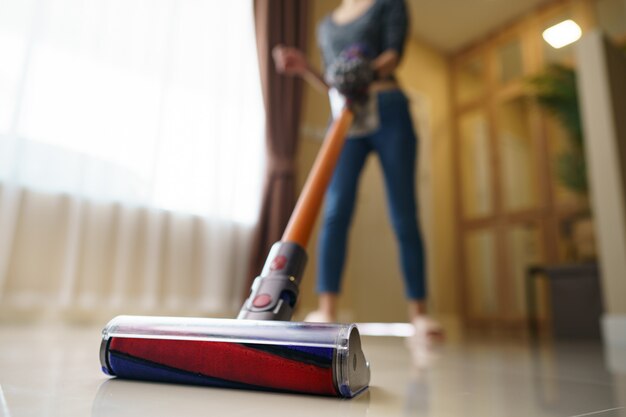
- Stick Vacuums: Lighter, often cordless versions of uprights. They’ve become incredibly popular for their convenience and are perfect for quick clean-ups and smaller homes.
The common thread? They are all manually operated. You are the pilot, directing the power exactly where it’s needed.
The Robot Vacuum: The Smart Assistant
A robot vacuum is a small, autonomous, disc-shaped device that uses a system of sensors, lasers, and smart mapping to navigate and clean your home on its own. It’s the “set it and forget it” approach to floor care. Modern models come with features like scheduling, app control, self-emptying docks, and even mopping capabilities.
The Face-Off: Key Differences in the Robot Vacuum Cleaner vs Traditional Vacuum Battle
Okay, the stage is set. Let’s compare these two cleaning champions across the categories that matter most to you.
Raw Power and Deep Cleaning
When it comes to sheer, brute-force cleaning power, the traditional vacuum is the undisputed champion. Their larger motors generate significantly more suction power, and their robust, fast-spinning brush rolls agitate deep-pile carpet fibers to dislodge embedded dirt, grime, and pet hair.
- Traditional Vacuums: If you have thick, plush carpets, a traditional upright or a powerful canister model is your best friend. They can pull out debris that has been ground into the carpet padding. Many also feature advanced HEPA filter systems that capture 99.97% of microscopic particles, making them a top choice for allergy sufferers.
- Robot Vacuums: While they have improved dramatically, robot vacuums simply can’t match the raw suction of a full-sized machine. They excel at surface-level cleaning and maintenance on hard floors and low-pile carpets. They’re fantastic for picking up daily dust, crumbs, and pet fur, but they may struggle with that deep, once-a-week clean on a shag rug.
The Verdict: For deep cleaning and tackling serious messes, the traditional vacuum takes the win.
Convenience and Automation
This is where the robot vacuum truly shines and changes the game completely. The value proposition isn’t about power; it’s about time.
- Robot Vacuums: Imagine your floors being cleaned every single day while you’re at work, at the gym, or even asleep. You can schedule cleanings from your phone, and high-end models will even empty their own dustbins into a larger base. This consistent, daily cleaning means your home is always tidier. You’re not cleaning from a state of “dirty,” you’re just maintaining “clean.”
- Traditional Vacuums: These require your time and effort. You have to physically take it out, plug it in (unless it’s a cordless stick vac), and push it around. Cleaning is an event, a block of time you have to set aside in your schedule.
The Verdict: For hands-off convenience and time-saving automation, the robot vacuum cleaner is in a league of its own.
Reaching Every Nook and Cranny
Cleaning isn’t just about the open floor space. What about stairs, corners, couch cushions, and ceiling cobwebs?
- Traditional Vacuums: With a suite of attachments—crevice tools, upholstery brushes, dusting wands—a canister or upright vacuum is the master of versatility. They can clean virtually any surface in your home, from floor to ceiling. Stairs are a particularly big challenge for robots.
- Robot Vacuums: Their low profile is a huge advantage for getting under beds, sofas, and dressers—places that are often neglected during manual vacuuming. However, they can’t climb stairs, clean your car, or vacuum your curtains. They are strictly floor-based cleaners and can sometimes struggle with tight corners.
The Verdict: It’s a tie, depending on your definition of “everywhere.” Robot vacuums win for under-furniture cleaning, while traditional vacuums win for all-around, multi-surface home cleaning.
|
Our Picks for the Best Vacuum Cleaner in 2026
As an Amazon Associate, we earn from qualifying purchases.
|
||
| Num | Product | Action |
|---|---|---|
| 1 | BISSELL CleanView Compact Upright Vacuum, Fits in Dorm Rooms & Apartments, Lightweight with Powerful Suction and Removable Extension Wand, 3508 |

|
| 2 | Shark NV352 Navigator Lift Away Upright Vacuum, Hepa Filter, Anti-Allergen Technology, Swivel Steering, Ideal for Carpet, Stairs, & Bare Floors, with Wide Upholstery & Crevice Tools, Lavender |
|
| 3 | Shark HV322 Rocket Deluxe Pro Corded Stick Vacuum with LED Headlights, XL Dust Cup, Lightweight, Perfect for Pet Hair Pickup, Converts to a Hand Vacuum, with Pet Attachments, Bordeaux/Silver |
|
| 4 | Shark | Upright Vacuum Cleaner | Navigator Lift-Away | Swivel Steering | HEPA Filter | Vacuum for Pet Hair | Crevice Tool & Dusting Brush Included | For Carpets & Hard Floors | White/Silver | NV356E |
|
| 5 | BLACK+DECKER dustbuster AdvancedClean Cordless Handheld Vacuum, Compact Home and Car Vacuum with Crevice Tool (CHV1410L) |
|
| 6 | BISSELL CleanView Compact Turbo Upright Vacuum with Quick Release Wand, Full Size Power, Compact Size for Apartments & Dorms, 3437F |
|
| 7 | BLACK+DECKER dustbuster QuickClean Cordless Handheld Vacuum, Car Vacuum Portable (HNVC215B10) |
|
| 8 | LEVOIT Cordless Vacuum Cleaner, Stick Vac with Tangle-Resistant Design, Up to 50 Minutes, Powerful Suction, Rechargeable, Lightweight, and Versatile for Carpet, Hard Floor, Pet Hair, LVAC-200 |
|
| 9 | Shark | Pet Cordless Vacuum Cleaner | LED Headlights | Removable Handheld Vacuum for Pet Hair | Crevice Tool & Pet Multi-Tool Included | 40min Runtime | For Carpet & Hard Floors | Grey | IX141 |
|
| 10 | Amazon Basics Upright Bagless Vacuum Cleaner for Carpet and Hard Floors, With Crevice and Upholstery Tools, Detachable Handle, Lightweight (8.4 lbs), 1.7L Dust Cup, 720W, 25ft Cord, Black/White |
|
Maintenance and Upkeep
Every vacuum needs some TLC to keep it running smoothly.
- Traditional Vacuums: Maintenance is straightforward. You either empty the canister or replace the bag, and occasionally wash or replace the filters. You’ll also need to periodically snip hair and string from the brush roll.
- Robot Vacuums: Maintenance can be slightly more involved. Because their components are smaller, the dustbin needs frequent emptying (unless you have a self-emptying model). You’ll also need to regularly clean the sensors, wheels, and a smaller brush roll.
As product design engineer Jennifer Albright notes, “The most significant innovation in robot vacuums hasn’t been suction, but autonomy. Self-emptying bases have solved the biggest user pain point—the tiny dustbin—transforming the robot from a daily-touch device to a weekly- or even monthly-touch one.”
The Verdict: A basic traditional vacuum is simpler to maintain, but a high-end robot vacuum with a self-emptying base requires the least frequent human intervention.
So, Which One Is Right For You?
The best choice in the robot vacuum cleaner vs traditional vacuum debate ultimately comes down to your specific needs, home layout, and lifestyle.
You Should Choose a Robot Vacuum If…
- You have a busy schedule and hate spending time on daily chores.
- You have pets that shed constantly, and you want to stay on top of the fur.
- Your home is mostly hard flooring or low-pile carpets.
- You live in a single-story home or apartment.
- You love smart home technology and automation.
- You or a family member has mobility issues that make manual vacuuming difficult.
A Traditional Vacuum Is Still Your Best Bet If…
- You have a lot of deep-pile or high-pile carpeting.
- You have a multi-story home with lots of stairs.
- You suffer from severe allergies and need the absolute best HEPA filter performance for a deep clean.
- You tend to have large, concentrated messes to clean up (like spilled cereal or dirt tracked in from the garden).
- Your budget is a primary concern, as entry-level traditional vacuums are very affordable.
- You need one machine that can also clean upholstery, drapes, and your car.
The Ultimate Solution: Can They Coexist?
For many, the answer isn’t “either/or” but “both.” This is the dream team of home cleaning. The robot vacuum acts as the daily maintenance crew, running every day to keep dust and pet hair at bay. It maintains a constant state of clean. Then, once a week or every two weeks, you bring out the traditional powerhouse for a deep clean—hitting the stairs, the thick area rugs, and the furniture.
This approach gives you the best of both worlds: the effortless daily upkeep of a robot and the deep-cleaning power of a traditional machine, all while saving you significant time and effort overall.
Frequently Asked Questions
Can a robot vacuum completely replace a traditional one?
For some people in small apartments with hard floors, the answer can be yes. However, for most homes, especially those with carpets, stairs, or pets, a robot vacuum is best seen as a powerful supplement to a traditional vacuum, not a complete replacement.
Are robot vacuums effective for pet hair?
Absolutely. This is one of their biggest strengths. By running daily, they prevent tumbleweeds of pet fur from ever forming. Look for models with silicone, bagless brush rolls, as they are less prone to hair tangles.
How do robot vacuums navigate around furniture?
Modern robot vacuums use a combination of technologies, including infrared sensors, cliff sensors (to avoid stairs), and advanced LiDAR or vSLAM (camera-based) mapping. This allows them to create an accurate map of your home, clean in efficient patterns, and avoid obstacles.
How long do robot vacuum cleaners last?
With proper maintenance, a good quality robot vacuum can last for 3 to 5 years. The battery is often the first component to degrade, but it can usually be replaced to extend the machine’s life.
Is the suction power of a robot vacuum enough?
While lower than an upright, its suction is more than sufficient for its intended job: picking up dust, hair, and light debris from the floor surface. Its effectiveness comes from consistency and repetition, not brute force.
The Final Verdict
The battle of the robot vacuum cleaner vs traditional vacuum doesn’t have a single winner because the victory depends on your personal needs. Think of it like cooking: a robot vacuum is your microwave—fast, convenient, and perfect for daily use. A traditional vacuum is your oven—more powerful, versatile, and essential for those big, important jobs.
The rise of the robot vacuum hasn’t made the traditional vacuum obsolete. Instead, it has changed how we approach cleaning. It allows for a new level of automated maintenance that keeps our homes healthier and gives us back our most valuable asset: our time. So, take a look at your floors, your schedule, and your cleaning pet peeves. The right choice is the one that makes your life easier and your home cleaner.